Herbs from Ayurveda, Chinese medicine and European folk practice, checked one by one against the modern trials that tested them, and who paid for those trials.
Last reviewed
14 min read
18 studies cited
People have treated failing memory with plants for thousands of years. Some of those plants gave us real medicines. Others have been tested carefully and did nothing. This page goes through the remedies families ask about most, and says plainly what happened when each one was put to a fair test.
Where these remedies come from
Three traditions supply most of the herbs on supplement shelves.
Ayurveda is India’s classical medical system, more than 2,000 years old. It treats memory and clear thinking as qualities to be nourished. Brahmi (bacopa), ashwagandha, turmeric and gotu kola all come from its herbal texts.
Traditional Chinese Medicine has its own long written record. It gave us ginseng, ginkgo and a club moss called Qian Ceng Ta, from which the compound huperzine A was purified. Huperzine A is now a prescription drug in China.
European herbalism is the monastery-garden and folk tradition behind sage, rosemary and lemon balm.
These traditions deserve respect. They were careful observers of plants and people, and modern medicine owes them real drugs: aspirin came from willow bark, and the heart drug digoxin from foxglove. Respect is also why we test. A remedy that works should show it in a fair trial, where neither the patient nor the doctor knows who got the herb and who got a dummy pill (a placebo). That is the only way to separate a real effect from hope, a good week, or the extra attention that comes with trying something new.
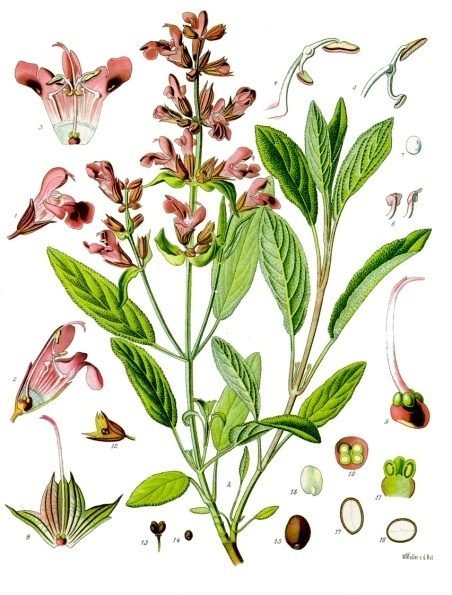
Plate 1.Garden sage, the subject of one small memory trial.Public domainWalther Otto Müller for Köhler’s Medizinal-Pflanzen, 1897. Via Wikimedia Commons.
How to read what follows
Each remedy has a verdict, an evidence-strength score from 1 to 5, and a flag showing who paid for the research. A “Seller conflict” flag means the company that makes the product paid for or supplied the study. That does not make the result false. It does mean it needs confirming by someone with nothing to sell. You can read more on how we grade studies and on who funds Alzheimer’s research.
One pattern stands out across this page. The trials run with public money, such as the US ginkgo and huperzine trials and a UK lemon balm trial, mostly found nothing. The strongest positive results tend to come from small, short or company-supported studies. That does not prove bias, but it is the pattern to keep in mind.
Ayurvedic remedies
Bacopa (brahmi)
Bacopa is a small creeping herb used in Ayurveda to sharpen memory. It has been tested more than most. When researchers pooled 9 trials in about 518 healthy adults, many of them older, bacopa gave small gains in attention and speed of thinking. Most other memory scores did not change. There is no good-quality trial in people who already have dementia. A trial in India in people with early Alzheimer’s is under way. Several of the healthy-adult trials used branded extracts, often supplied by the makers.
Too early3/5Funder not confirmed
Bacopa (brahmi): pooled trials in healthy adults
Kongkeaw C et al., Journal of Ethnopharmacology 2014 Read the study
Design
Meta-analysis of 9 randomized trials
People
About 518 adults without dementia
Length
12 weeks or more
Result Small gains in attention and speed of thinking. Most other memory and thinking scores did not change. None of these trials was in people with dementia.
Who paid: Not reported. Several of the included trials used branded extracts, often supplied by the makers (not yet confirmed trial by trial).
Conflicts: Not reported
Bacopa can cause nausea, loose stools and cramps. It may act on the same brain chemical as the Alzheimer’s drugs donepezil, rivastigmine and galantamine, so the effects could add up. It may also affect the thyroid. Some Ayurvedic products have been found to contain heavy metals, so if a family chooses to use one, a product tested by an independent lab is safer.
Ashwagandha
Ashwagandha is a root used in Ayurveda as a general tonic. One trial in 50 adults with mild memory loss found better memory and attention after 8 weeks on a branded extract. The maker donated the product. Most other ashwagandha studies are also small, short and linked to industry, and none has looked at dementia.
Too early2/5Seller conflict
Ashwagandha root extract in mild memory loss
Choudhary D et al., Journal of Dietary Supplements 2017 Read the study
Design
Randomized, placebo-controlled trial
People
50 adults with mild cognitive impairment
Length
8 weeks
Result 600 mg a day of a branded extract (KSM-66) improved memory, attention and speed scores more than placebo. Small and short; no trial has looked at dementia itself.
Who paid: Ixoreal Biomed, maker of KSM-66, donated the product
Conflicts: The maker of the product supplied it.
There are case reports of liver injury. Ashwagandha can stimulate the thyroid, adds to the drowsiness of sleeping pills and sedatives, may lower blood sugar and blood pressure, and may interact with drugs that suppress the immune system.
Turmeric and curcumin
Turmeric is the yellow root in curry and a staple of Ayurvedic medicine. Curcumin is its best-known active compound. The main problem is absorption: the body takes up very little curcumin from ordinary turmeric or standard capsules.
That explains the split in the research. A trial at UCLA gave people with Alzheimer’s 2 to 4 grams a day of ordinary curcumin for 24 weeks. It did not help, and barely any reached the blood. A different trial used a specially formulated curcumin that the body absorbs much better, at 90 mg twice a day, in 40 adults without dementia. After 18 months their memory scores were better and brain scans showed lower plaque signals. That study was small, and several authors had a financial stake in the scan tracer used.
Didn’t work3/5Public / nonprofit
Regular curcumin in Alzheimer’s
Ringman JM et al., Alzheimer’s Research & Therapy 2012 Read the study
Design
Randomized, placebo-controlled trial
People
36 people with mild to moderate Alzheimer’s
Length
24 weeks
Result 2 to 4 grams a day of ordinary curcumin did not help thinking or brain markers, and very little of it reached the blood.
Who paid: National Institutes of Health; John Douglas French Foundation
Conflicts: Not reported
Promising2/5Seller conflict
Absorbable curcumin (Theracurmin) in adults without dementia
Small GW et al., American Journal of Geriatric Psychiatry 2018 Read the study
Design
Randomized, placebo-controlled trial
People
40 adults without dementia
Length
18 months
Result 90 mg twice a day of a specially formulated, better-absorbed curcumin improved memory and attention scores and lowered plaque signals on brain scans. Small study, not people with Alzheimer’s.
Who paid: NIH and foundations; the maker supplied the product
Conflicts: Several authors had a financial interest in TauMark LLC, which licensed the brain-scan tracer used.
Kitchen turmeric is not the same thing. A teaspoon of turmeric in food contains far less curcumin than either trial used, and in a form the body barely absorbs. Cooking with it is fine as food. It has not been tested as medicine. Turmeric supplements can have a mild blood-thinning effect, so they call for care alongside warfarin and other blood thinners.
Claim check
Too early
What’s being said
“A morning blend of turmeric, ginger, cinnamon and cayenne with black pepper and honey is proven to reverse cognitive decline.”
Widely shared social-media video
What the studies actually show
No human trial has tested any spice blend for dementia. Curcumin has one small positive trial using a special absorbable form, and a null trial of the regular kind. Cinnamon’s evidence is 2 small human studies that disagree. The blend is fine as food. It is not proven medicine.
Gotu kola
Gotu kola (Centella asiatica) is a leafy herb used in both Ayurveda and Chinese medicine. When researchers pooled 11 trials, it had no effect on any area of memory or thinking compared with placebo, though people felt more alert and less angry in the short term. A small early-stage trial funded by the US National Institutes of Health is running in Oregon.
Didn’t work2/5Funder not confirmed
Gotu kola: pooled trials
Puttarak P et al., Scientific Reports 2017 Read the study
Design
Meta-analysis of 11 randomized trials (5 of gotu kola alone)
People
Not reported in our notes
Length
Varied
Result No effect on any area of memory or thinking compared with placebo. People felt more alert and less angry in the short term.
Who paid: Not reported
Conflicts: Not reported
Liver injury has been reported. Three women developed hepatitis after taking gotu kola for 20 to 60 days. People with liver disease should avoid it.
Chinese medicine
Huperzine A
Huperzine A is purified from a club moss used in Chinese medicine. It is a genuine drug. It blocks the enzyme that breaks down acetylcholine, a chemical messenger for memory, which puts it in the same class as donepezil (Aricept). That class is called cholinesterase inhibitors. It is sold as a prescription medicine in China and as a supplement in the United States, where it is sometimes called “natural Aricept”.
The largest Western trial was run by the US National Institute on Aging’s Alzheimer’s Disease Cooperative Study. Its main test dose did not improve thinking. A higher dose looked better in an extra analysis, which is a lead for future research, not proof. A meta-analysis of 20 mostly Chinese trials, with 1,823 people, found better scores on a short memory test. But most of those trials were of moderate or poor quality, and the two that used a more detailed test found no difference.
About 210 people with mild to moderate Alzheimer’s (number not yet confirmed)
Length
About 16 weeks (not yet confirmed)
Result The main test, 200 micrograms twice a day, did not improve thinking scores. In an extra analysis the planners added, a higher dose (400 micrograms twice a day) showed some improvement. Extra analyses like this suggest ideas for the next trial; they do not prove benefit.
Who paid: National Institute on Aging, through the Alzheimer’s Disease Cooperative Study
Conflicts: Not reported. The company that supplied the drug is not yet confirmed.
Result Scores on a short memory test (MMSE) improved at 8, 12 and 16 weeks. The two trials that used a more detailed test (ADAS-Cog) found no difference. Most trials were of moderate or poor quality; only 1 in 5 described how people were randomly assigned. Side effects were mild: nausea, poor appetite, dizziness.
Who paid: Beijing University of Chinese Medicine
Conflicts: Not reported
Ginseng
Ginseng root is central to Chinese and Korean medicine. An independent Cochrane review found only 5 trials with usable data, 289 people, all healthy. It found no convincing evidence that ginseng helps thinking, and no high-quality evidence at all in dementia. Some small Korean studies in Alzheimer’s reported gains, but people knew what they were taking, and many used products supplied by makers.
Didn’t work3/5Public / nonprofit
Ginseng for memory and thinking: Cochrane review
Geng J et al., Cochrane Database of Systematic Reviews 2010 Read the study
Design
Systematic review of randomized trials
People
289 healthy adults (5 trials with usable data)
Length
Varied
Result The reviewers found no convincing evidence that ginseng helps thinking in healthy people and no high-quality evidence in people with dementia. No serious side effects were reported.
Who paid: Cochrane (independent)
Conflicts: Not reported
Ginseng can weaken the effect of warfarin, lower blood sugar (adding to diabetes drugs), cause sleeplessness and may interact with a type of antidepressant called MAOIs.
Ginkgo
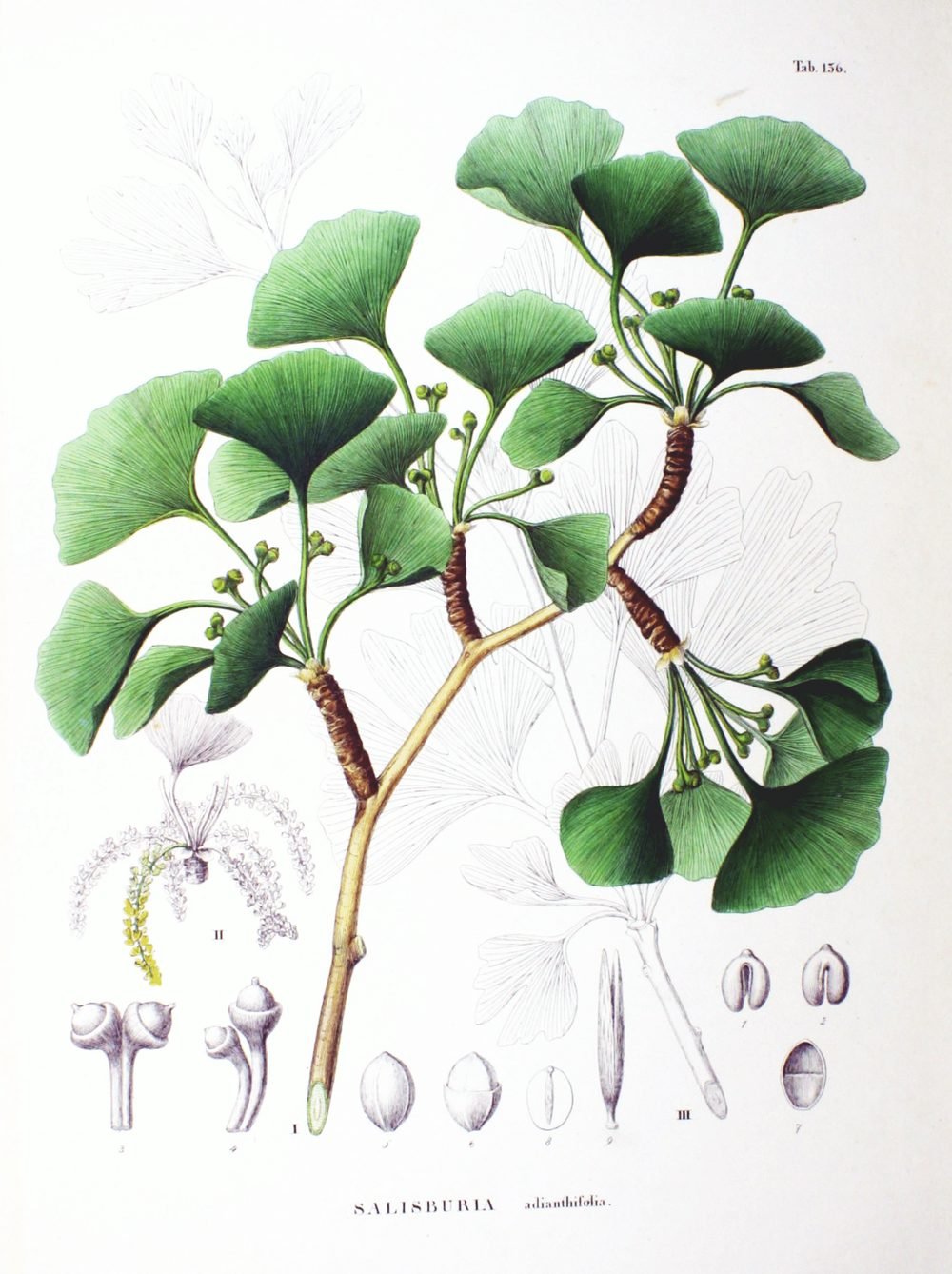
Ginkgo leaf is one of the best-selling memory supplements in the world. It is also one of the best tested, and the news is not good for prevention. The GEM trial, paid for by the US National Institutes of Health, gave 3,069 older adults ginkgo or a placebo for about 6 years. Dementia was no less common in the ginkgo group. Whether ginkgo helps a little in people who already have dementia is less clear; those results are mixed.
Result 120 mg of ginkgo extract twice a day (240 mg daily) did not lower the rate of dementia or Alzheimer’s compared with placebo. This is one of the largest supplement trials ever run for dementia prevention.
Who paid: National Institutes of Health (NCCAM, NIA, NHLBI, NINDS); the maker donated the pills
Conflicts: Not reported
Ginkgo can increase bleeding risk when combined with blood thinners such as warfarin, aspirin, clopidogrel (Plavix) and the newer anticoagulants, and with anti-inflammatory painkillers. It is also a concern for anyone with a history of seizures.
European herbs
Sage
Sage has a long reputation for memory in European herb lore. One trial in Iran gave 42 people with mild to moderate Alzheimer’s sage extract or placebo for 4 months. The sage group did better on thinking and daily-function scales and had less agitation. No other team has repeated it in Alzheimer’s.
Too early2/5Funder not confirmed
Sage extract in Alzheimer’s
Akhondzadeh S et al., Journal of Clinical Pharmacy and Therapeutics 2003 Read the study
Result People taking 60 drops a day of sage extract scored better on thinking and daily-function scales than those on placebo, and had less agitation. It has not been repeated by another team.
Who paid: Not reported. Run at Tehran University of Medical Sciences.
Conflicts: Not reported
Common sage contains thujone, which can cause seizures at high doses. Concentrated extracts and sage essential oil should be avoided by anyone with epilepsy. Sage in cooking is fine.
Rosemary
Rosemary has long been linked with memory in European folk tradition. In a small experiment, 20 healthy adults sat in a room scented with rosemary oil. People with more of a rosemary compound in their blood did better on speed and accuracy tasks. That is interesting, but no one with dementia has been studied.
Too early1/5Funder not confirmed
Rosemary scent and thinking speed
Moss M, Oliver L, Therapeutic Advances in Psychopharmacology 2012 Read the study
Design
Small experiment in healthy volunteers
People
20 healthy adults
Length
One session
Result People who breathed rosemary oil scent in a room had a rosemary compound (1,8-cineole) in their blood. Higher levels went with faster, more accurate answers on thinking tasks. No one with dementia was tested.
Who paid: Not reported
Conflicts: Not reported
Rosemary is pleasant and low-risk as a scent, a comforting sensory activity rather than a treatment. Essential oils are for breathing in, not swallowing. Rosemary and eucalyptus oils can trigger seizures in people prone to them.
Lemon balm and aromatherapy
Lemon balm (Melissa officinalis) is a mint-family herb long used for calm. In 2002 a British trial in care homes rubbed lemon balm lotion on the face and arms of 72 people with severe dementia and agitation. Agitation dropped much more than in people who got sunflower oil. It was a striking result.
A larger trial in 2011 then compared lemon balm oil with donepezil and with placebo. All three groups got calmer, and there was no difference between them. Part of the difficulty is that it is almost impossible to disguise a strong scent, so people may know what they are getting.
Promising2/5Public / nonprofit
Lemon balm oil for agitation in severe dementia
Ballard CG et al., Journal of Clinical Psychiatry 2002 Read the study
Design
Randomized, double-blind trial against sunflower oil
People
72 care-home residents with severe dementia and agitation
Length
4 weeks
Result Lemon balm lotion rubbed on the face and arms twice a day cut agitation scores by 35%, against 11% with sunflower oil. 60% of the lemon balm group improved by at least 30%, against 14% of the comparison group. No significant side effects.
Who paid: UK academic and NHS
Conflicts: Not reported
Didn’t work3/5Funder not confirmed
Lemon balm oil vs donepezil vs placebo for agitation
Burns A et al., Dementia and Geriatric Cognitive Disorders 2011 Read the study
Design
Randomized, placebo-controlled trial
People
More than the first trial (exact number not yet confirmed)
Length
12 weeks
Result No difference among lemon balm oil, donepezil and placebo. All three groups got calmer. Hiding which oil is which is hard with a strong scent, which makes these trials difficult.
Who paid: Not yet confirmed
Conflicts: Not reported
Looking at aromatherapy as a whole, an independent Cochrane review of 13 trials with 708 people found no convincing evidence that it helps agitation or other symptoms. Aromatherapy is harmless and pleasant as comfort care. It is not a proven treatment.
Didn’t work4/5Public / nonprofit
Aromatherapy for dementia: Cochrane review
Ball EL et al., Cochrane Database of Systematic Reviews 2020 Read the study
Design
Systematic review of randomized trials
People
708 people in 13 trials
Length
Varied
Result No convincing evidence that aromatherapy helps agitation or other symptoms. Of 5 agitation trials with usable data, 1 showed benefit and 4 did not. Harms were poorly reported. Evidence quality was low.
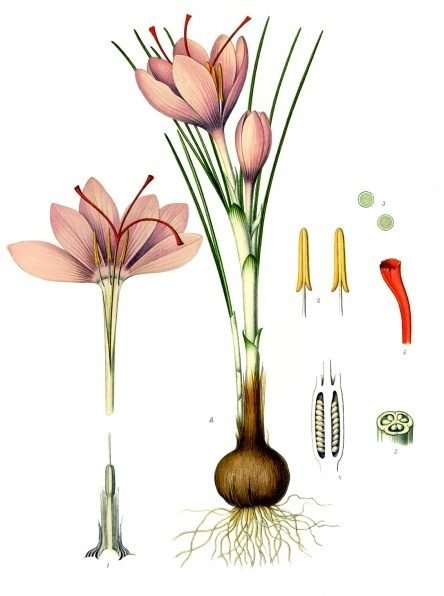
Saffron, the spice from crocus flowers, has a long history in traditional medicine. In a trial in Iran, 30 mg a day worked about as well as donepezil over 22 weeks in 54 people with mild to moderate Alzheimer’s, with fewer side effects. There was no placebo group. Nearly all saffron trials come from one research group, and the saffron company co-funded and supplied this one. It needs repeating elsewhere.
Too early2/5Seller conflict
Saffron compared with donepezil (Aricept)
Akhondzadeh S et al., Psychopharmacology 2010 Read the study
Design
Randomized, double-blind trial against a prescription drug
People
54 people with mild to moderate Alzheimer’s
Length
22 weeks
Result 30 mg of saffron a day worked about as well as donepezil on thinking scores, with fewer side effects. There was no placebo group, and nearly all saffron trials come from one research group in Iran.
Who paid: Tehran University of Medical Sciences; Green Plants of Life Co. (IMPIRAN)
Conflicts: The saffron company co-funded the trial and supplied the saffron.
Plate 2.Saffron crocus. The red stigmas are the spice tested against donepezil.Public domainFranz Eugen Köhler, Köhler’s Medizinal-Pflanzen, 1897. Via Wikimedia Commons.
Lion’s mane mushroom
Lion’s mane is an edible mushroom with a history in East Asian cooking and medicine. In one trial, 30 older adults with mild memory loss took 3 grams a day for 16 weeks. Their thinking scores rose, then fell back within 4 weeks of stopping. A later trial in mild Alzheimer’s, paid for by the extract’s maker, found no clear benefit on thinking, though some daily-living scores improved. One trial in younger adults found worse recall.
Too early2/5Funder not confirmed
Lion’s mane mushroom in mild memory loss
Mori K et al., Phytotherapy Research 2009 Read the study
Design
Randomized, placebo-controlled trial
People
30 older adults with mild cognitive impairment
Length
16 weeks
Result 3 grams a day of dried mushroom powder raised thinking scores. The gains were gone within 4 weeks of stopping.
Who paid: Not yet confirmed
Conflicts: Not reported
Too early1/5Seller conflict
Lion’s mane extract in mild Alzheimer’s
Li IC et al., Frontiers in Aging Neuroscience 2020 Read the study
Design
Pilot randomized, placebo-controlled trial
People
49 people with mild Alzheimer’s enrolled (41 in the main analysis)
Length
49 weeks
Result No clear benefit on thinking. Some scores, including daily living, improved; others did not.
Who paid: Grape King Bio (maker of the extract)
Conflicts: The product maker paid five authors’ salaries.
Side effects include stomach upset and rash. There is one case report of breathing failure. Products vary a great deal.
Cinnamon
A 2023 review gathered every study of cinnamon and the brain. Of 40 studies, 33 were in animals and 5 in cells. The 2 human studies disagreed. There is no trial in dementia. Cassia, the common supermarket cinnamon, contains coumarin, which can harm the liver in large amounts.
Too early1/5Funder not confirmed
Cinnamon and the brain: a review of all studies
Nakhaee S et al., Nutritional Neuroscience 2024 (online 2023) Read the study
Design
Systematic review
People
40 studies, only 2 in humans
Length
Not applicable
Result 33 studies were in animals and 5 in cells. The 2 human studies disagreed with each other. There is no trial of cinnamon in people with dementia.
Who paid: Not reported
Conflicts: Not reported
All the remedies at a glance
Traditional remedies and what trials foundBest human evidence for memory or dementia, as of September 2026.
Remedy
Tradition
Best human evidence
Verdict
Who paid
Safety
BacopaBrahmi
Ayurveda
9 trials, about 518 healthy adults: small gains in attention
Too early
Not reported
Stomach upset; may add to Alzheimer’s drugs; thyroid
Ashwagandha
Ayurveda
50 adults with mild memory loss, 8 weeks
Too early
Maker supplied
Liver injury reports; thyroid; sedatives
CurcuminTurmeric
Ayurveda
Regular form null in 36 with Alzheimer’s; absorbable form positive in 40 without
Too early
NIH and seller ties
Blood thinners
Gotu kola
Ayurveda, Chinese
11 trials pooled: no effect on thinking
Didn’t work
Not reported
Liver injury reports
Huperzine A
Chinese
US trial: main dose null; Chinese trials low quality
Didn’t work
NIA
Never with donepezil-type drugs; slow heart
Ginseng
Chinese, Korean
Cochrane: 289 healthy people, no convincing effect
Didn’t work
Cochrane
Warfarin; diabetes drugs; MAOIs
Ginkgo
Chinese
GEM: 3,069 people, 6 years, no prevention
Didn’t work
NIH
Bleeding with blood thinners; seizures
Sage
European
42 with Alzheimer’s, 4 months, positive; not repeated
Too early
Not reported
Concentrated forms and epilepsy
Rosemary
European
20 healthy adults, one session
Too early
Not reported
Oils: inhale only; seizures
Lemon balm
European
72 positive, then a larger trial null
Didn’t work
UK academic
Low; skin irritation
Aromatherapy
Several
Cochrane: 13 trials, 708 people, not convincing
Didn’t work
Cochrane
Low as comfort care
Saffron
Several
54 with Alzheimer’s: similar to donepezil
Promising
Maker co-funded
Not reported in our sources
Lion’s mane
East Asian
30 with mild memory loss; gains faded after stopping
Too early
Maker (Alzheimer’s trial)
Stomach upset, rash
Cinnamon
Several
2 small human studies that disagree
Too early
Not reported
Cassia coumarin: liver
“Not reported” means the funder was not stated in the sources we checked. Verdicts summarize the evidence for memory or dementia, not for other uses.
Interactions to tell the doctor about
Supplements in the United States are not approved by the FDA for effectiveness, and what is inside the bottle can vary. Families often don’t mention them at appointments because they seem harmless. These are the combinations our sources flag.
Plate 3.Ginkgo, from Siebold and Zuccarini’s Flora Japonica.Public domainPhilipp Franz von Siebold and Joseph Gerhard Zuccarini, 1870. Via Wikimedia Commons.
Words used on this page
Placebo
A dummy pill or treatment that looks like the real one. Comparing against a placebo shows whether a remedy does more than hope and attention alone.
Cholinesterase inhibitor
A drug that slows the breakdown of acetylcholine, a chemical messenger used in memory. Donepezil, rivastigmine, galantamine and huperzine A all work this way.
Meta-analysis
A study that pools the results of several trials. It is only as good as the trials it includes.